Interior Renovation in Dubai: What Actually Happens Behind the Walls You're About to Tear Down

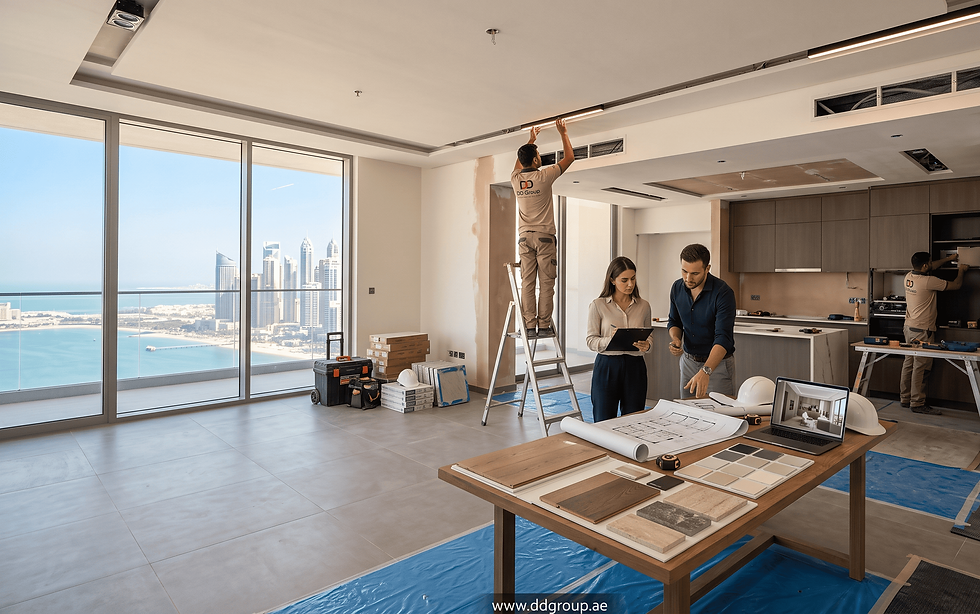
A friend of mine moved into a fifteen-year-old apartment in Jumeirah Lake Towers last year and swore the layout was "fine, just needs paint." Six months later, she'd ripped out the kitchen, rerouted the lighting, and replaced flooring she didn't even know was uneven until she stood barefoot on it one morning and felt the dip near the balcony door. That's the thing about interior renovation Dubai projects the scope rarely stays where you first imagined it. Humidity, sun exposure, building age, and the sheer pace at which interior trends move here all push renovation projects to grow beyond the initial to-do list.
If you're staring down a similar decision whether it's a villa in Arabian Ranches showing its age or a compact apartment in Downtown that just doesn't function the way you live this guide walks through what an interior renovation actually involves in this city, where people typically go wrong, and how to plan one without losing your mind (or your weekends) in the process.
Why Interior Renovation Looks Different in Dubai
Renovating a home in Dubai isn't quite the same exercise as renovating one in, say, London or Toronto. The climate alone changes the calculus. Materials that would happily last decades in a temperate country can warp, fade, or crack here within a few summers if they're not suited to intense heat and sharp indoor-outdoor temperature swings.
Wood veneers bubble near west-facing windows. Certain fabrics lose their color faster than you'd expect. Even paint finishes behave differently depending on how much direct sun a wall gets.
Then there's the pace of the city itself. Dubai's residential stock spans everything from decades-old low-rises to towers finished last year, and each era of construction comes with its own quirks different ceiling heights, different electrical standards, different assumptions about how much natural light a room should get. A renovation plan that ignores the building's age and original construction approach tends to run into surprises somewhere around week three.
None of this means renovation here is harder, exactly. It just means the planning stage matters more than people expect going in.
Core Elements of a Dubai Interior Renovation Project
1. Space Planning and Layout Review
Before anyone touches a wall, a proper renovation starts with honestly assessing how the space is actually used versus how it was originally designed. Open-plan kitchens became popular here relatively recently, so a lot of older apartments still have closed-off kitchens that feel disconnected from the living area. Reworking that flow is often the single change that makes a home feel dramatically different more so than new furniture or a fresh coat of paint ever could.
2. Flooring
Flooring choices in Dubai tend to lean toward materials that handle heat and foot traffic well porcelain tile, engineered timber, and increasingly, large-format tiles that mimic natural stone without some of stone's maintenance demands. Homeowners renovating older properties often discover that what's underneath the existing flooring (uneven screed, old adhesive residue, moisture from years past) needs attention before new flooring goes down. Skipping that step is one of the more common regrets people mention after the fact.
3. Lighting Design
Lighting gets underestimated constantly. A room with the "right" furniture and finishes can still feel flat and uninviting if the lighting plan wasn't considered early. In Dubai specifically, where curtains often stay closed for large parts of the day to manage heat and glare, layered lighting ambient, task, and accent carries more of the room's mood than it would in a climate where natural light floods in freely most of the year.
4. Kitchen and Bathroom Overhauls
These two spaces account for a disproportionate share of renovation budgets, and for good reason they're the rooms where plumbing, electrical work, and finishes all intersect. A kitchen renovation might look cosmetic from the outside, but it usually involves rerouting pipework, updating electrical circuits for new appliances, and sometimes structural changes if a wall is coming down to open up the layout. Bathrooms carry similar complexity, especially waterproofing, which is one area where cutting corners causes problems that don't show up until months later.
5. Wall Treatments and Finishes
Paint is the obvious one, but Dubai interiors have also embraced textured finishes, wallpaper in feature areas, and panelling partly for aesthetics, partly because these finishes can help manage the acoustic and visual monotony of very open, glass-heavy apartments.
6. Ceiling and Electrical Work
False ceilings are common in Dubai renovations, partly for aesthetic reasons and partly to conceal ductwork, wiring, and AC components. This is also usually when electrical panels get reviewed and updated a step that's easy to overlook but matters a lot if you're adding smart home features or heavier appliance loads than the original wiring was designed for.
Expert Insight: The Planning Phase Decides Everything
If there's one thing that separates a renovation that goes smoothly from one that drags on for months, it's the depth of planning before demolition starts. I've spoken with homeowners who assumed a two-week bathroom refresh and ended up managing a six-week project because nobody checked the condition of the waterproofing membrane beforehand. That's not bad luck it's a planning gap.
A good renovation plan accounts for:
What's structural versus cosmetic
What permits or building management approvals are needed before work begins
Realistic sequencing (electrical and plumbing before flooring, not after)
A buffer for the unexpected because in older buildings, something usually surfaces once walls come down
Homeowners who treat the planning phase as seriously as the execution phase tend to finish faster and with fewer arguments over scope changes.
Common Mistakes in Dubai Interior Renovations
Underestimating the impact of climate on material choice. Choosing finishes without factoring in sun exposure or humidity is one of the fastest ways to end up redoing work within a couple of years.
Skipping a proper site survey. Assuming the building's original drawings match what's actually behind the walls is a gamble. Pipework gets rerouted over the years, walls get added, and drawings don't always keep up.
Underestimating timeline for kitchens and bathrooms. These rooms involve more trades working in sequence than people expect — plumbers, electricians, tilers, and finishing crews all need to coordinate.
Choosing finishes before finalizing the layout. It sounds backwards, but plenty of people pick tiles and paint colors before the layout is locked, then have to redo selections once the actual room proportions change.
Not accounting for building management timelines. Many Dubai buildings have specific renovation policies and approval processes through their management office, and factoring that lead time in early avoids unnecessary delays later.
Frequently Asked Questions
How long does a typical interior renovation take in Dubai?
It depends heavily on scope. A single-room refresh might take a couple of weeks, while a full apartment or villa renovation involving structural, electrical, and plumbing work often runs several months. Older buildings tend to take longer due to unforeseen issues behind walls and floors.
Do I need building management approval before renovating in Dubai?
Most residential buildings and communities in Dubai require some form of notification or approval before renovation work begins, particularly for anything involving plumbing, electrical changes, or structural alterations. It's worth checking with your building management or community office early in the planning process.
What's the difference between renovation and refurbishment?
Renovation generally refers to more substantial changes — altering layouts, replacing systems like plumbing or electrical, and significant structural or cosmetic overhauls. Refurbishment tends to mean lighter, more cosmetic updates, like repainting or replacing fixtures, without changing the underlying structure or systems.
Can I stay in my home during an interior renovation?
It's possible for smaller, room-by-room projects, but it becomes impractical for full-scale renovations involving multiple rooms, especially kitchens and bathrooms, where water and electricity may be disrupted for extended periods.
What materials hold up best in Dubai's climate for interior renovation?
Porcelain tiles, engineered timber (rather than solid hardwood, which is more prone to expansion), and UV-resistant fabrics and finishes tend to perform well. Materials chosen without accounting for heat and humidity often show wear far sooner than expected.
Should electrical and plumbing be updated even if they're not visibly faulty?
In older properties, yes — it's often worth having wiring and pipework assessed during a renovation, since problems aren't always visible until walls are opened up. It's far easier to address this while the space is already under construction than to redo finished work later.
Conclusion
Interior renovation in Dubai isn't just about picking new tiles or repainting tired walls it's a layered process shaped by climate, building age, and how thoughtfully the early planning stage is handled. The homeowners who come out the other side happiest are usually the ones who slowed down at the start: surveying the space properly, sequencing the work sensibly, and choosing materials built for this environment rather than borrowed from a different climate entirely. Get that foundation right, and the rest of the renovation tends to follow a lot more smoothly than anyone expects going in.
Comments